Why Aircond Maintenance Matters in Malaysia
Living in Malaysia means your air conditioner works harder than almost anywhere else in the world. With average temperatures hovering between 27°C and 35°C year-round and humidity levels regularly exceeding 80%, your AC unit is running for 10 to 16 hours a day in most households. That kind of workload takes a toll, and without regular maintenance, your aircond will lose efficiency, consume more electricity, and eventually break down when you need it most.
After 15 years of servicing air conditioners across Petaling Jaya, I have seen the same avoidable problems over and over again. The good news is that many of these issues can be prevented with simple maintenance habits that any homeowner can adopt. Here are the tips that will save you money and keep your home cool.
Tip 1: Clean Your Filters Every Two to Four Weeks
This is the single most important thing you can do for your aircond. Dirty filters restrict airflow, force the compressor to work harder, and can increase your electricity consumption by 15 to 20 percent. In Malaysia’s dusty and humid environment, filters clog faster than in temperate climates.
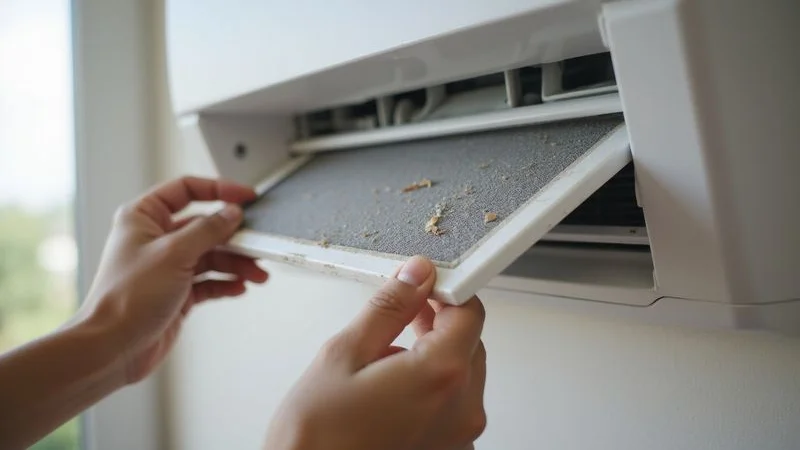
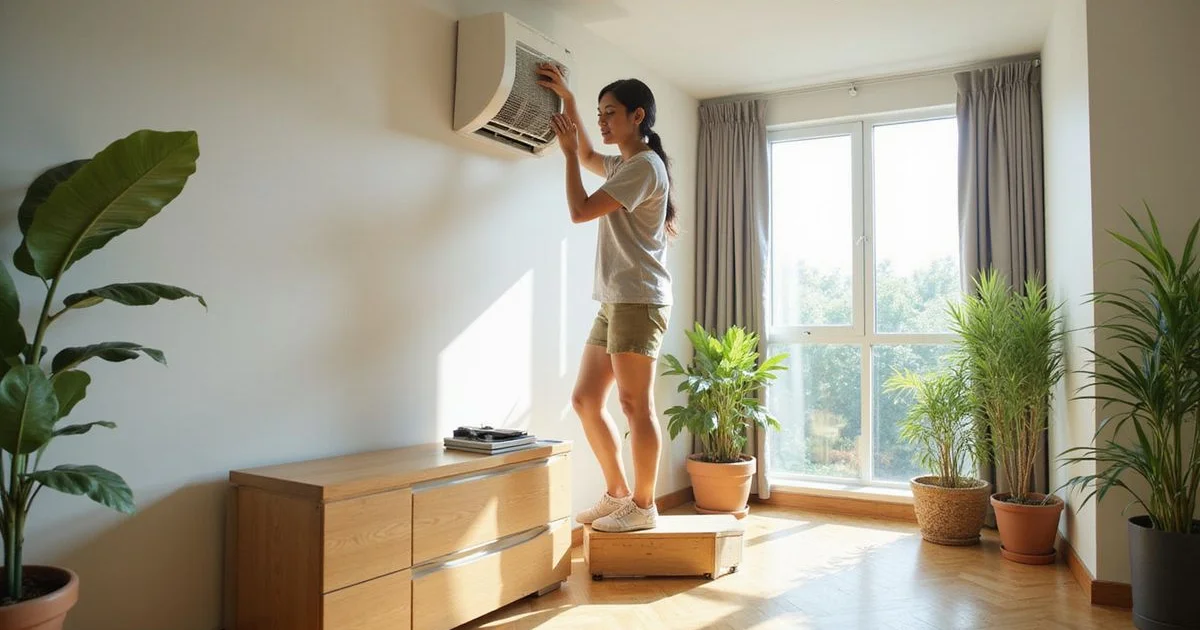
Pull out the filter, vacuum off the loose dust, and rinse it under running water. Let it dry completely before putting it back. This takes about 10 minutes and costs you nothing. If you have pets, children, or live near a construction site, clean your filters every two weeks instead of four.
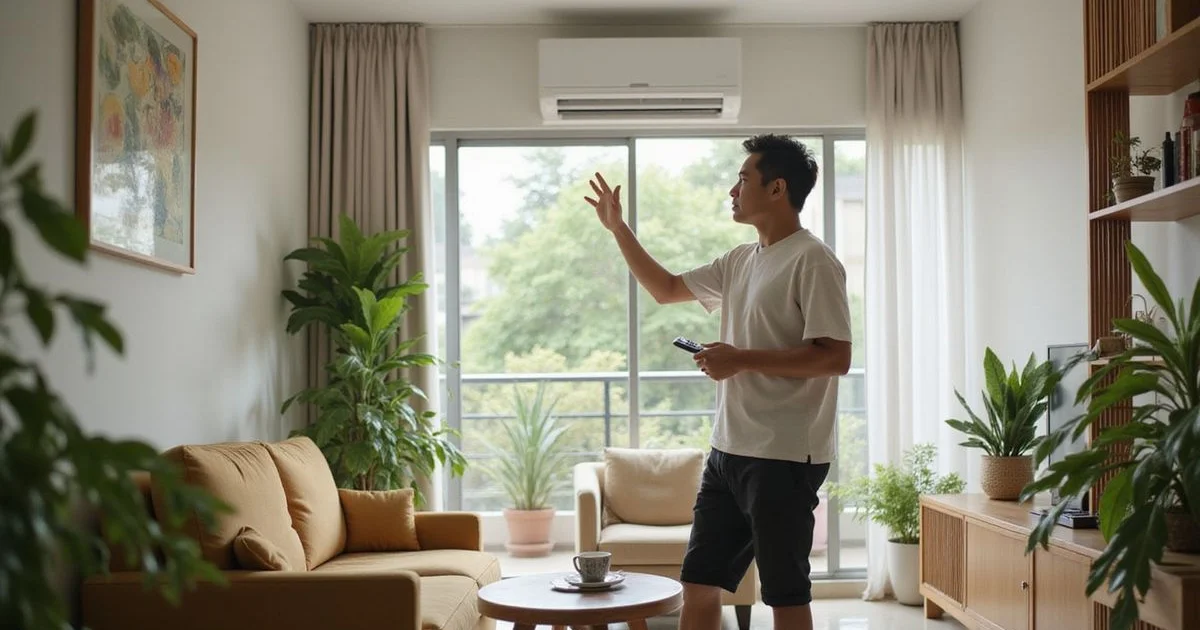
Tip 2: Set Your Temperature to 24-26°C
Many Malaysians set their aircond to 16°C or 18°C, thinking it will cool the room faster. It does not. Your AC cools at the same rate regardless of the temperature setting. All you are doing is making the compressor run longer, which wastes electricity.
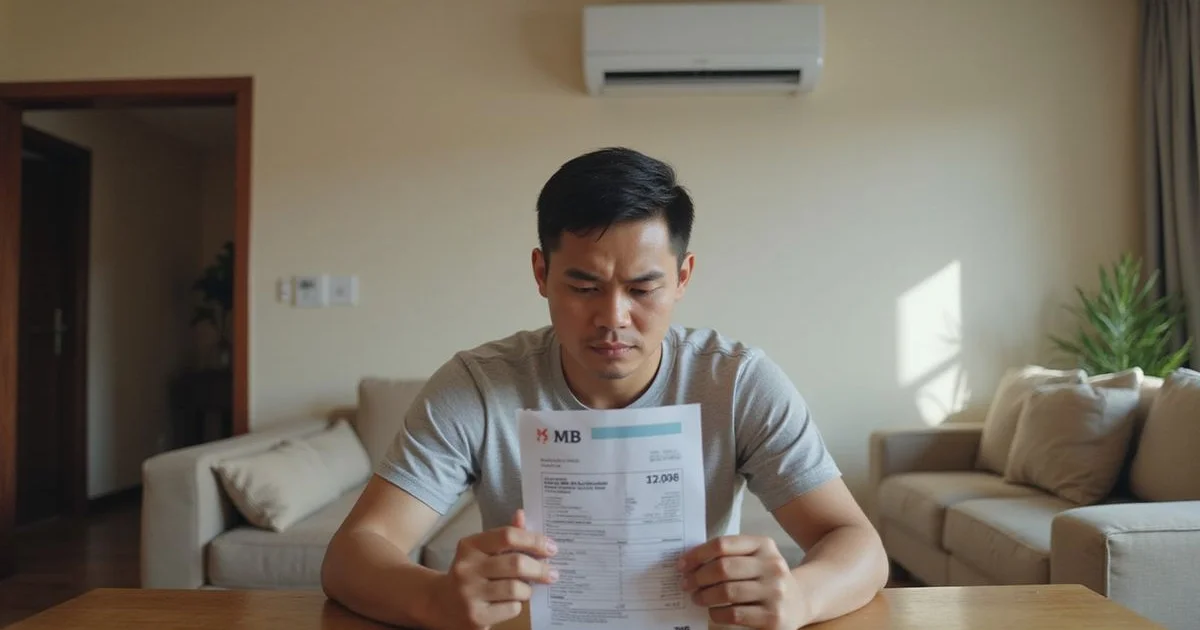
The ideal temperature range for comfort and efficiency in Malaysia is 24°C to 26°C. At these settings, your body stays comfortable, the unit cycles on and off naturally, and your TNB bill stays manageable. Pairing this with a ceiling fan allows you to set the temperature even higher while still feeling cool, because moving air improves the wind-chill effect on your skin.
Tip 3: Keep Vents and Indoor Units Unblocked
Your aircond needs clear space around the indoor unit to circulate air properly. Curtains draped over the unit, furniture pushed right up against it, or shelves stacked in front of the vents all restrict airflow and reduce cooling efficiency.
Make sure there is at least 30 cm of clearance below and around your indoor unit. Check that the louvers can swing freely and that no objects are blocking the air return at the top of the unit. Restricted airflow is one of the top reasons we find ice forming on evaporator coils during service calls.
Tip 4: Schedule Professional Cleaning Every 3 to 4 Months
Filter cleaning is something you can handle yourself, but a full standard cleaning goes much deeper. A professional technician will clean the evaporator coil, drainage tray, blower fan, and drain pipe, all areas where mould, bacteria, and grime accumulate in Malaysia’s humid conditions.
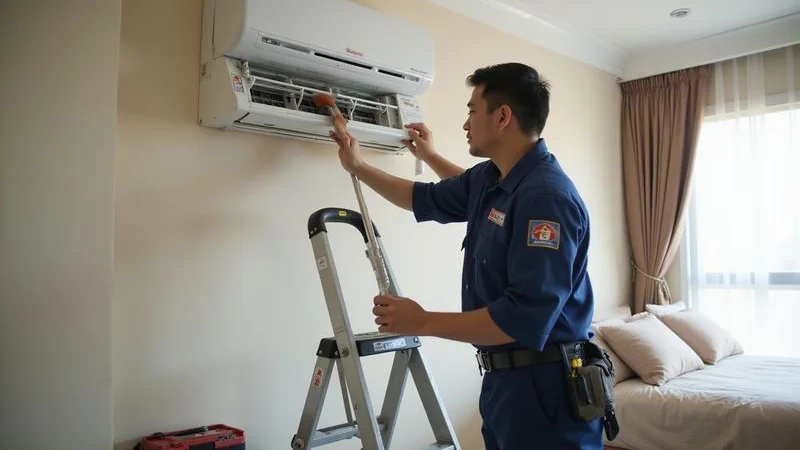
At PJ Kool Aircond Service, our standard cleaning starts from RM85 per unit. For most homes in Petaling Jaya, scheduling this service every three to four months keeps your aircond running efficiently and prevents the buildup that leads to water leaks, bad smells, and poor cooling.
Tip 5: Get a Chemical Wash Every 6 to 12 Months
Standard cleaning handles surface-level buildup, but over time, stubborn grime, mould, and mineral deposits accumulate deep in the evaporator coils and blower fan. A chemical wash uses specialised cleaning solutions to dissolve this buildup completely.
We recommend a chemical wash every 6 to 12 months depending on usage. If your aircond runs more than 12 hours daily, is in a dusty area, or has not been serviced in a long time, you will likely need the more frequent schedule. Our chemical wash service starts from RM160 and includes a free gas top-up, which alone is worth RM50 to RM100.
Tip 6: Check Your Outdoor Unit Regularly
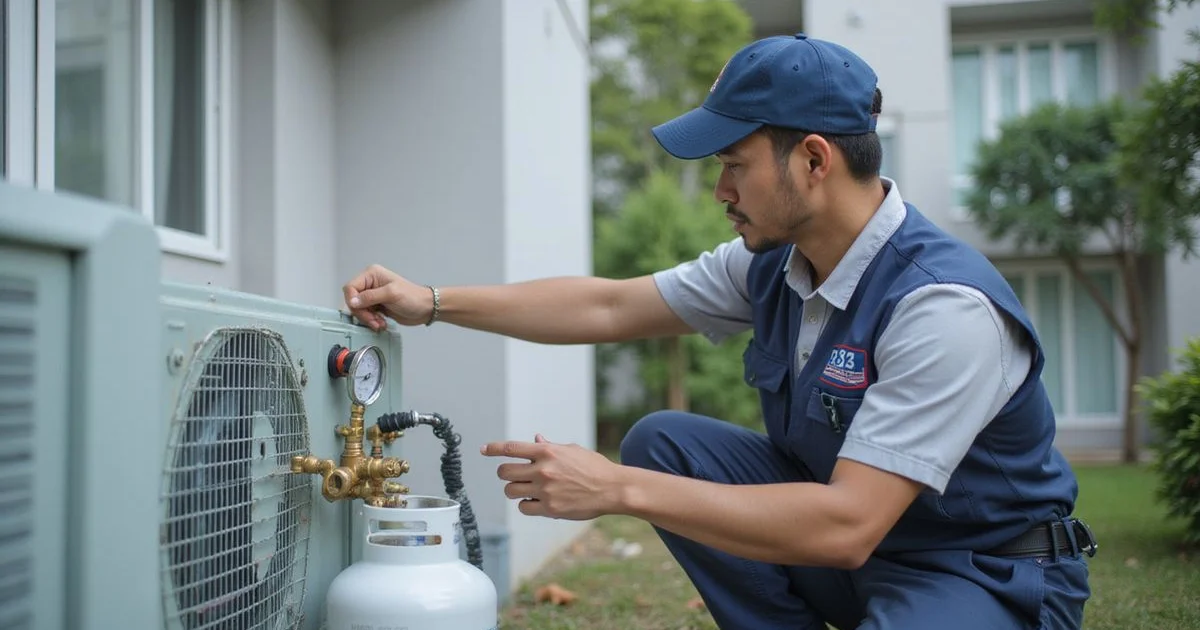
The outdoor condenser unit is often forgotten because it is mounted on a wall bracket or sitting on the ground outside. But this unit needs airflow just as much as the indoor unit. Check monthly for leaves, debris, bird nests, or anything blocking the fins. Hose down the condenser with water every few months to remove dust buildup.
Also check that the unit is level and that the mounting brackets are secure. An unlevel unit can cause vibration, which leads to loose pipe connections and refrigerant leaks over time.
Tip 7: Listen and Watch for Warning Signs
Your aircond will tell you when something is wrong if you pay attention. Here are the early warning signs to watch for:
- Reduced airflow — filter is dirty or blower fan is clogged
- Water dripping indoors — blocked drainage pipe
- Strange smells — mould or bacteria in the unit
- Unusual noises — loose parts, failing compressor bearings, or ice on coils
- Unit cycling on and off frequently — possible refrigerant leak or dirty coils
- Room not cooling properly — low gas, dirty coils, or undersized unit
If you notice any of these signs, do not wait for the problem to get worse. A quick diagnostic (from RM50 at PJ Kool) can identify the issue before it becomes an expensive repair.
Malaysian Climate Makes Maintenance Non-Negotiable
In countries with seasonal climates, air conditioners get a break during cooler months. In Malaysia, your aircond runs year-round with no rest period. The constant humidity also means mould and bacteria growth is accelerated compared to drier climates. This is why maintenance schedules that work in other countries need to be more frequent here.
Homeowners who follow these tips consistently report lower electricity bills, fewer breakdowns, and aircond units that last 12 to 15 years instead of the typical 7 to 8 years. The cost of regular maintenance is a fraction of what you would spend on emergency repairs or premature replacement.
Take Action Today
Start with the easiest step: clean your aircond filters this weekend. Then set a reminder on your phone to repeat it every three weeks. When your unit is due for professional servicing, contact PJ Kool Aircond Service for thorough, affordable maintenance by experienced technicians who know Petaling Jaya homes inside and out.

MANDATORY PRE-OUTPUT AUDIT (DO NOT SKIP)
Before outputting, you MUST check Introduction, Conclusion , EVERY <h2> and <h3> section against this checklist:
For the Introduction and Conclusion:
- Is it broken into 1-2 sentence paragraphs?
- Is there at least one 1-sentence paragraph?
- No paragraph exceeds 3 sentences?
- Does the conclusion include a clear Call to Action (CTA) or next step?
- Is there any em dashes (—) in the introduction or conclusion?
For EVERY body section (Exclude Frequently Asked Questions (FAQs) section):
- Count paragraphs. If 4+, does it have a list, table, blockquote, or H3?
- Are there 3+ consecutive H2/H3 sections with only paragraphs? (FORBIDDEN)
- Are lists used effectively to break up dense information?
- Is there any em dashes (—) in the body sections?
If ANY checkbox is unchecked, you must STOP and fix before outputting.
Why Aircond Maintenance Matters in Malaysia
You know the moment your AC stops blowing cold air on a scorching Tuesday afternoon.
It usually happens right when the humidity hits 90% and you have absolutely no backup plan for cooling down.
Living in Malaysia means your air conditioner works harder than almost anywhere else, often running for 10 to 16 hours a day in temperatures hovering between 27°C and 35°C.
We see firsthand how this workload impacts systems across Petaling Jaya, leading to higher electricity consumption and unexpected breakdowns.
This guide will break down the specific maintenance habits that prevent these issues and keep your home cool year-round.
Tip 1: Clean Your Filters Every Two to Four Weeks
This is the single most effective action you can take to lower your energy bills immediately.
Dirty filters force your compressor to work significantly harder to pull in air, which can increase electricity consumption by up to 15%.
We often find that homes near major construction zones, like those in Damansara or ongoing MRT projects, experience filter clogging twice as fast as other areas.
Regular cleaning prevents dust from bypassing the filter and settling on the cooling coil, where it forms a hard crust that is much more expensive to remove.
The Correct Cleaning Method
Follow this simple routine to protect your unit:
- Open the front panel carefully by lifting from the side grooves until it clicks into the locked position.
- Vacuum the filter first to remove the heavy layer of grey dust before wetting it, as water can turn this dust into a stubborn mud.
- Wash with water and mild soap if necessary, then let the filters air dry completely away from direct sunlight to prevent warping.
We recommend doing this every two weeks if you have pets or carpets, as animal fur and fabric fibres accumulate rapidly.
Tip 2: Set Your Temperature to 24-26°C
Many homeowners instinctively drop the temperature to 16°C hoping to cool a hot room faster.
This common misconception does not speed up cooling; it only forces the compressor to run continuously without cycling off.
We advise setting your unit between 24°C and 26°C, which is the sweet spot for balancing comfort with significant cost savings.
According to energy efficiency data, every 1°C increase in your AC setting can save you up to 10% on your electricity usage.
The “Turbo” Mode Alternative
If you need rapid cooling when you first walk in the door, use the “Powerful” or “Turbo” function instead of lowering the temperature dial.
This mode increases fan speed and compressor output for 20 minutes before automatically returning to your previous efficient setting.
Using a ceiling fan alongside your AC allows you to raise the thermostat to 26°C or 27°C while still feeling cool due to the wind-chill effect on your skin.
| Setting | Compressor Activity | Monthly Cost Impact |
|---|---|---|
| 18°C | runs 90-100% of the time | Highest (potential TNB tier jump) |
| 24°C | Cycles on/off regularly | Moderate savings |
| 26°C + Fan | Minimal run time | Best efficiency |
Tip 3: Keep Vents and Indoor Units Unblocked
Your air conditioner relies on a constant loop of air intake and output to function correctly.
We frequently see tall wardrobes or heavy curtains blocking the airflow, which confuses the unit’s thermostat and causes short-cycling.
Ensure there is at least 30 cm of clearance below and around your indoor unit to allow proper air circulation.
Check the top of the unit specifically, as homeowners often place decorative items or stack boxes there without realizing it blocks the primary air intake.
Restricted airflow is a primary cause of ice formation on evaporator coils, which can lead to water leaking down your wall.
Tip 4: Schedule Professional Cleaning Every 3 to 4 Months
While cleaning filters helps, it cannot reach the biological buildup that occurs deep inside the machine.
The high humidity in Kuala Lumpur creates the perfect breeding ground for “bio-slime,” a jelly-like substance that clogs drainage pipes and causes leaks.
We perform a standard cleaning to physically remove this slime, along with mold and bacteria that accumulate on the blower fan.
Service frequency depends heavily on your usage patterns:
- Heavy Usage (Nightly): Service every 3-4 months.
- Moderate Usage (Weekends only): Service every 6 months.
- Light Usage (Guest room): Service once a year.
Our standard service starts from RM85 per unit and includes clearing the water tray, which is often the source of that musty “sour sock” smell.
Ignored units eventually suffer from “sweating,” where condensation forms on the outside casing due to internal blockages.
Tip 5: Get a Chemical Wash Every 6 to 12 Months
Standard cleaning uses water and pressure, but some contaminants require a stronger approach.
Over time, the aluminum fins on your cooling coil can become impacted with grime that water alone cannot dislodge.
We use a specialised alkaline-based chemical wash to dissolve these stubborn deposits and brighten the coils back to their original state.
This service is crucial for older units or those located near kitchens where cooking grease mixes with dust to form a sticky coating.
The Gas Top-Up Myth
Many technicians will tell you that gas needs topping up at every service, but this is factually incorrect.
We only add refrigerant if there is a leak, as the gas system is a sealed loop that should not deplete under normal operation.
However, if a top-up is genuinely needed, our chemical wash package starts from RM160 and includes a free gas check and top-up to ensure your system pressure is optimal.
Always ask your technician to show you the pressure gauge reading before and after any gas is added.
Tip 6: Check Your Outdoor Unit Regularly
The outdoor compressor is the heart of your system, yet it is often left to gather debris in the yard or balcony.
We suggest a monthly visual check to ensure leaves, dried grass, or even bird nests are not blocking the heat exchange fins.
The unit needs to “breathe” to release the heat absorbed from your room; if it cannot, the compressor will overheat and trip the safety cut-off.
Use a garden hose with low pressure to gently rinse dust off the back of the unit, being careful not to bend the delicate aluminum fins.
Pro Tip: Check that the vibration rubbers (the black feet under the unit) are not cracked or missing. Worn rubbers cause excessive noise and can vibrate copper pipes until they crack and leak gas.
Tip 7: Listen and Watch for Warning Signs
Your air conditioner will often give you audible or visual clues before it fails completely.
We advise homeowners to pay attention to these specific symptoms to catch problems early:
- Hissing sound: This often indicates a refrigerant leak where gas is escaping the copper pipes.
- Grinding noise: Usually points to a worn motor bearing in the blower fan.
- Water dripping indoors: A clear sign of a blocked drainage pipe or a dirty tray.
- Frequent cycling: If the outdoor unit starts and stops every 3 minutes, the compressor may be overheating.
- Warm air blowing: This could mean the capacitor has failed or the gas has leaked out entirely.
Identifying these issues early allows for a targeted repair rather than a full system replacement.
A quick diagnostic check (from RM50 at PJ Kool) can often save you hundreds of Ringgit by fixing a small leak before it destroys the compressor.
Malaysian Climate Makes Maintenance Non-Negotiable
In seasonal countries, air conditioners get a rest during autumn and winter, prolonging their lifespan naturally.
Here in Malaysia, your unit fights high heat and extreme humidity year-round without a break.
We find that well-maintained units in PJ homes last 12 to 15 years, while neglected ones often fail permanently within 7 years.
Regular maintenance is not just about cooling; it is about keeping your TNB bills predictable and avoiding the stress of an emergency breakdown.
Take Action Today
Start with a simple win: check your filters right now.
Set a recurring reminder on your phone for the first Sunday of every month to inspect them again.
When you are ready for a thorough service that goes beyond the basics, contact PJ Kool Aircond Service to book a slot with our experienced team.
We are ready to help you keep your home comfortable and your energy costs under control.
Ahmad
Senior HVAC Technician
Senior HVAC technician with 15+ years of aircond repair experience in the Klang Valley.