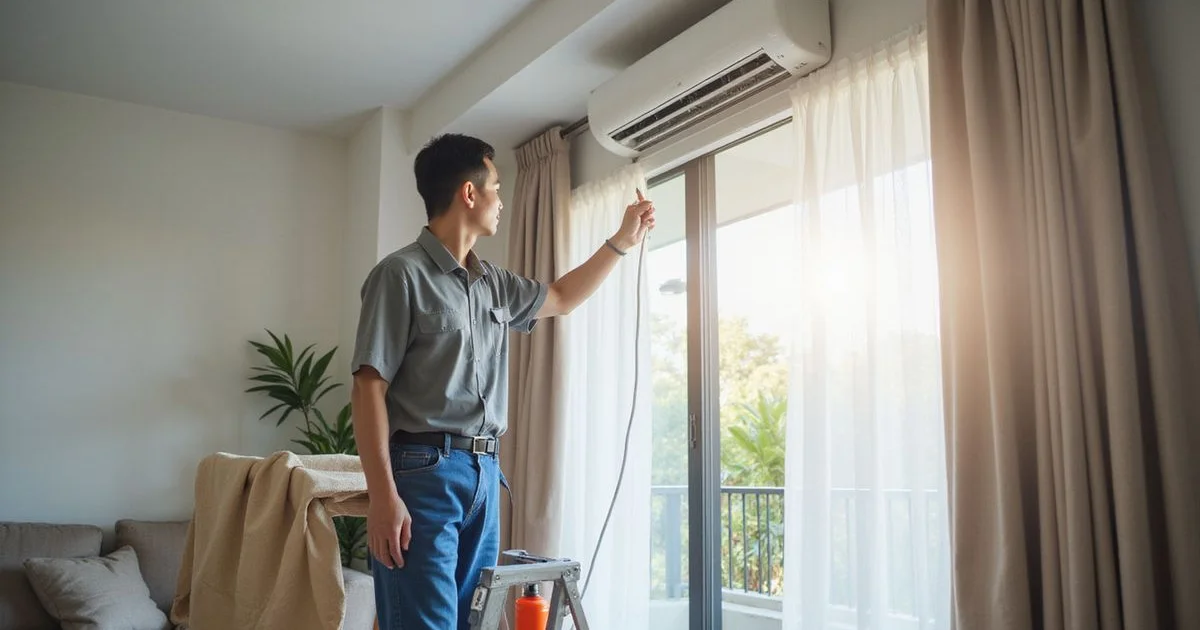
We know the struggle of a breakdown in the middle of a breathless Kuala Lumpur afternoon. The heat in the Klang Valley is relentless, and a malfunctioning unit can turn your home into a sauna within minutes. Our team at PJ Kool Aircond Service has spent over 15 years servicing units across Petaling Jaya, and we see the same pattern constantly.
Homeowners often ask where the line is drawn between a quick DIY fix and a necessary professional call. You want to save money. We respect that goal.
There is a clear boundary, however. Crossing it often turns a RM50 problem into a RM1,000 disaster.
This guide outlines exactly what you can handle safely. It also details the specific repairs that require a certified aircond repair technician to manage risks and costs.
Let’s look at the safe maintenance tasks first, then the danger zones, and finally the real cost differences.
What You Can Safely Fix Yourself
Air Filter Cleaning
This is the single most effective way to lower your TNB bill. A clogged filter blocks airflow, forcing the unit to work up to 15% harder to cool the room. We see this constantly in Malaysia, especially during haze season when particulate matter spikes.
Why this matters: Dust buildup on filters restricts air intake. This starves the evaporator coil. The result is often ice formation on the coil or water leaking onto your floor.
How to do it correctly:
- Safety first: Switch off the aircond and unplug it at the socket.
- Access: Lift the front panel of the indoor unit gently until it clicks into the propped position.
- Remove: Slide out the nylon mesh filters carefully to avoid scattering dust.
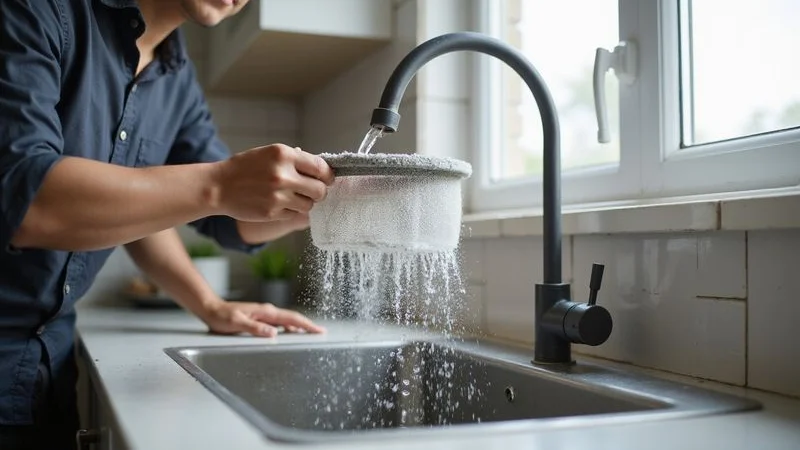
- Clean: Wash them under running water. Use a soft sponge if the dust is sticky (common in kitchens).
- Dry: Let them air dry completely away from direct sunlight to prevent warping.
- Reinstall: Slide them back in, close the panel, and power up.
Frequency: Check them every two weeks if you live near main roads like the LDP or Federal Highway. Otherwise, once a month is sufficient.
Remote Control Troubleshooting
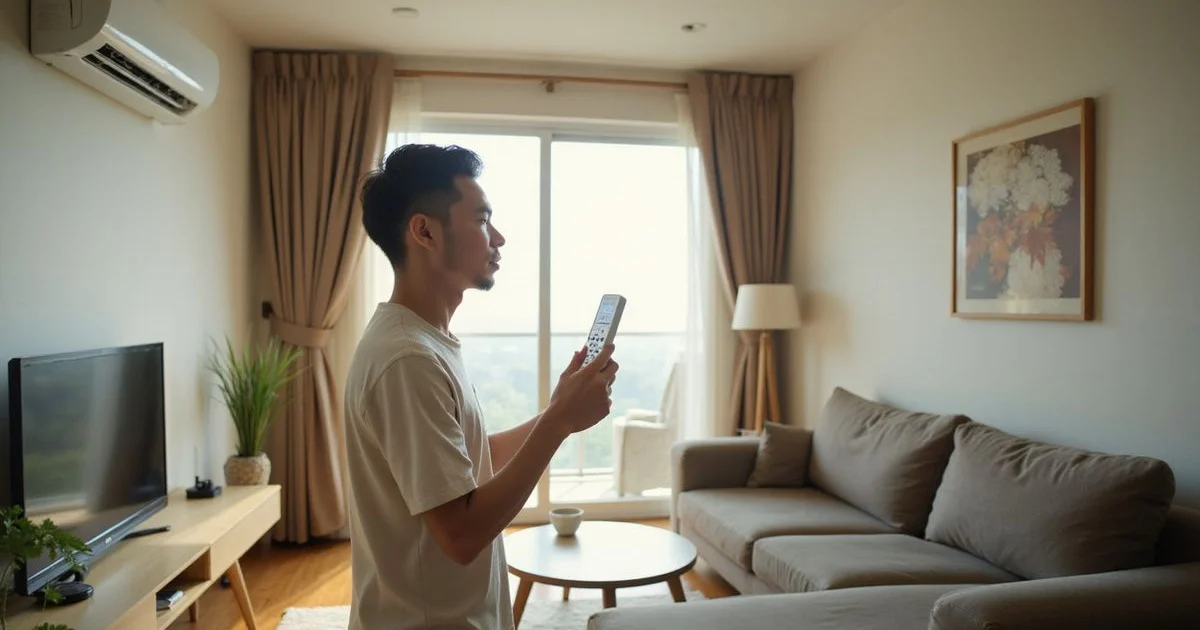
You might think the unit is dead, but the issue often lies in the handheld controller. We receive dozens of calls annually that turn out to be simple remote issues.
Steps to diagnose the remote:
- Swap the batteries: High humidity in Malaysia can cause cheap alkaline batteries to leak and corrode terminals. Use high-quality batteries.
- Verify the mode: Ensure the display shows the snowflake icon (Cool). The “Drop” icon (Dry) or “Fan” symbol will not cool your room effectively.
- The Camera Test: Point the remote at your phone camera and press a button. If you see a purple light on your phone screen, the remote is sending a signal.
- Check the timer: Clear any accidental “Off” timer settings that might be shutting the unit down.
Clearing the Drainage Outlet
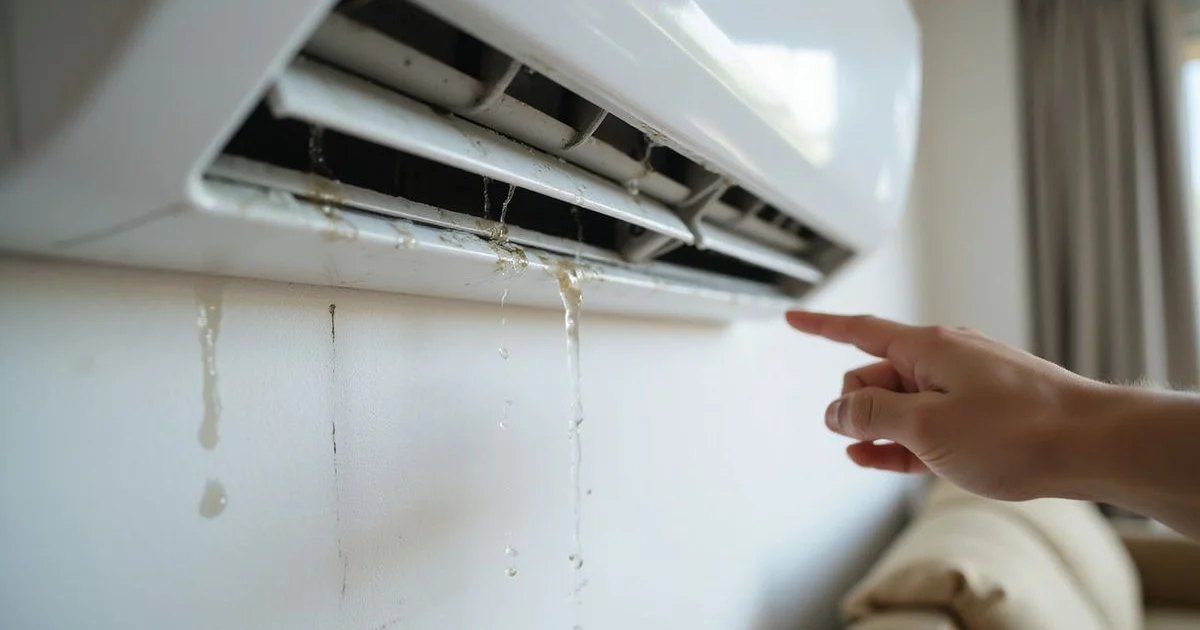
Water leaking from the indoor unit is a classic sign of a clogged drain pipe. In our tropical climate, algae and “bio-slime” grow rapidly inside these wet pipes. You can often clear minor blockages at the exit point.
The safe method: Locate the drain pipe on your exterior wall. It is usually a small white PVC pipe.
- Observe: Water should drip steadily when the aircond is running. No drip usually means a blockage.
- Vacuum: Use a wet/dry vacuum at the end of the drain pipe for 10 seconds. This suction can pull out the jelly-like algae blocking the flow.
- Gravity: Ensure the end of the pipe is not submerged in a bucket or drain, as this causes backflow.
Cleaning the Outdoor Unit Exterior
Your outdoor compressor unit needs to breathe to release heat. If it cannot dissipate heat, the compressor overheats and trips the safety switch.
Maintenance you can perform:
- Clear the perimeter: Remove dead leaves, pots, or storage boxes stacked against the unit.
- Gentle rinse: Use a standard garden hose with low pressure to wash dust off the back fins.
- Warning: Never use a high-pressure jet. The aluminum fins are fragile and will bend, permanently damaging the unit’s efficiency.
- Check the fan: Ensure no vines or branches have grown into the fan guard.
Checking the Circuit Breaker
A sudden shutdown might be a safety trip rather than a component failure. Most Malaysian homes have a dedicated breaker for each aircond unit in the distribution board (DB).
The reset procedure: Look for the switch labeled “A/C” or “Aircond.” If it is in the middle or “OFF” position, push it fully to “OFF” first, then back to “ON.”
Important Safety Rule: If the breaker trips again immediately with a loud pop or spark, stop. This indicates a hard electrical short. Resetting it repeatedly allows high current to flow, which can melt internal wiring or cause a fire.
What You Should NOT Attempt
Refrigerant (Gas) Work
We strongly advise against DIY gas top-ups. Modern airconds use R410A or R32 refrigerant. These gases operate under extremely high pressure (over 120 PSI on the low side). R32 is also mildly flammable.
The hidden dangers:
- System Contamination: introducing air or moisture into the copper pipes creates acid that eats the compressor windings.
- Overcharging: Adding gas without weighing it causes “liquid slugging,” where liquid refrigerant enters the compressor and destroys the valves.
- Leak Myths: Gas is not consumed like petrol. If you are low on gas, you have a leak. Simply adding gas without fixing the leak is a waste of money.
Our chemical wash service includes a professional gas pressure check because we use calibrated manifold gauges to ensure the system is balanced correctly.
Electrical Component Repairs
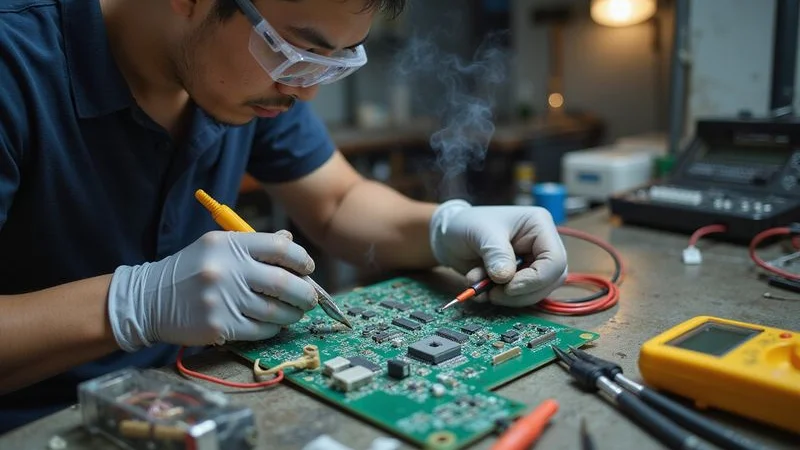
The voltage inside your aircond is 240V, which is lethal. Even when the power is off, certain components remain dangerous.
High-risk components:
- Capacitor: This silver cylinder stores a powerful electrical charge to start the compressor. It can deliver a severe shock even hours after the unit is unplugged.
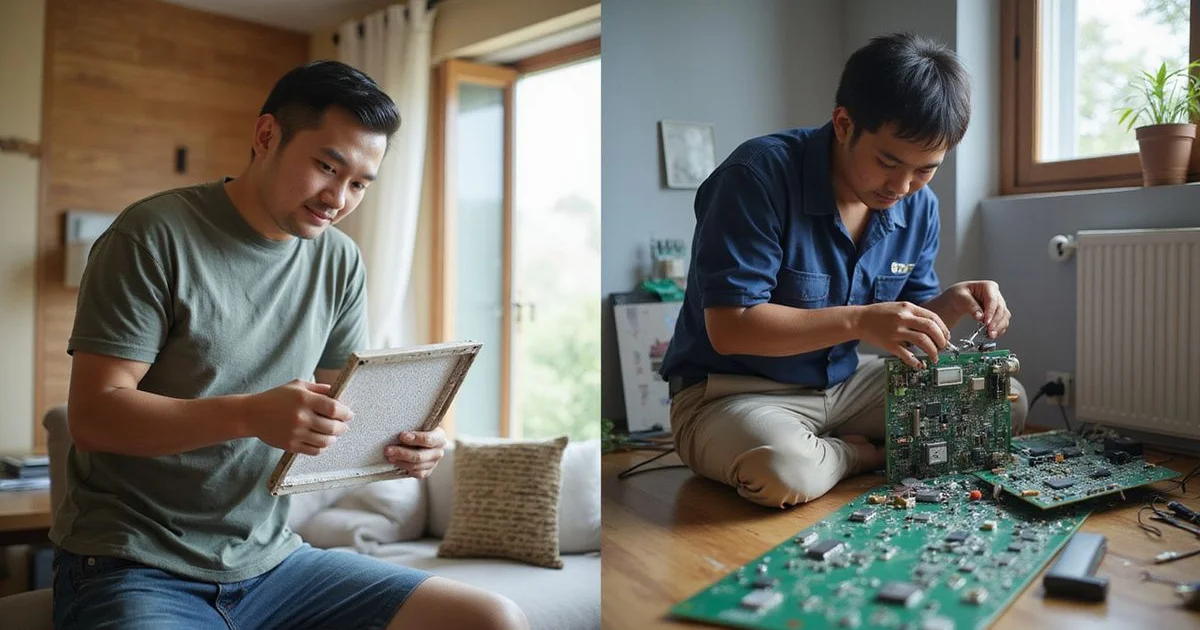
- PCB Board: These computer boards are sensitive. Static electricity from your hand can fry a RM400 board instantly.
- Wiring terminals: Loose connections can generate heat and melt the terminal block. Tightening them requires torque knowledge to avoid stripping the screws.
Compressor or Motor Repairs
The compressor is the heart of your aircond. It is a hermetically sealed unit containing high-precision pistons or scrolls.
Why this is a pro-only job: You cannot open a compressor to repair it. If it fails, it must be cut out and replaced. This requires:
- Recovering the old gas safely.
- Brazing (welding) new copper connections with an oxy-acetylene torch.
- Vacuuming the lines to 500 microns to remove moisture.
Chemical Washing
Hardware stores sell “aircond cleaner” sprays. These are fine for surface dust, but they do not perform a deep clean.
The limits of DIY sprays:
- Surface only: The spray cannot penetrate the thick evaporator coil to remove mold deep inside.
- Corrosion risk: Leaving strong alkaline chemicals on the fins without a high-pressure rinse will corrode the aluminum within months.
- Drainage issues: The dirt you wash off often flows down and clogs the drainage tray, causing a massive leak a few days later.
A professional chemical overhaul involves dismantling the unit and using a canvas bag to catch the high-pressure water waste.
Pipe Insulation and Copper Pipe Work
Condensation on pipes is a major issue in our humid climate. If the black foam insulation (Armaflex) is torn, water will drip onto your plaster ceiling, causing expensive rot and mold.
Why professionals handle this: Refitting insulation usually requires disconnecting the pipes. This opens the sealed gas system. Any work on copper pipes requires flaring tools to create a leak-proof seal. A poor flare is the number one cause of gas leaks in Malaysia.
Cost Comparison: DIY vs Professional
We believe in transparency. Sometimes DIY is the smart financial move. Other times, it is a gamble.
Here is a breakdown of typical costs in the KL/PJ market for 2026:
| Task | DIY Cost | Professional Cost | Risk Level |
|---|---|---|---|
| Filter Cleaning | RM 0 | Included in Service | None |
| Drainage Clearing | RM 0 | RM 80 - RM 120 | Low |
| Chemical Wash | RM 30 (Spray can) | RM 150 - RM 200 | High (Corrosion risk) |
| Gas Top-Up | Not Available | RM 80 - RM 150 | Dangerous |
| Capacitor Change | RM 40 (Parts only) | RM 180 - RM 250 | Severe (Shock hazard) |
| PCB Board Repair | RM 300+ (If mistaken) | RM 350 - RM 650 | High |
| Compressor Swap | Impossible | RM 900 - RM 1,600 | Pro Only |
The Bottom Line
You should absolutely handle the basics. Cleaning your filters and keeping the outdoor unit clear are the best ways to protect your investment. These simple habits can extend the lifespan of your unit by years.
Complex issues require a different approach. The moment you need to touch gas, wiring, or water pressure, the risk outweighs the savings. At PJ Kool Aircond Service, our aircond repair team carries the right tools to diagnose the root cause immediately, not just the symptom.
Don’t let a small fix become a major renovation. Reach out to us if you are unsure, and we will help you keep your home cool and safe.
Ahmad
Senior HVAC Technician
Senior HVAC technician with 15+ years of aircond repair experience in the Klang Valley.