In over 20 years of running PJ Kool Aircond Service in Petaling Jaya, we have seen the same story play out hundreds of times. A homeowner calls because their unit isn’t cooling, and a technician convinces them they need a gas top-up. This is one of the most persistent scams in the Malaysian aircond industry because it exploits a simple fact: most people cannot verify if their unit actually needs gas.
We are going to break down exactly how this deception works and give you the insider knowledge to spot it. You will learn the specific pressure readings to look for, the red flags of a dishonest quote, and why we decided to include free gas top-ups with every chemical wash at PJ Kool to eliminate this risk entirely.
How the Fake Gas Top-Up Scam Works
The scam follows a predictable script. Once you know the steps, you will be able to spot them from a mile away.
Step 1: The “Too Good to Be True” Quote
You find a service provider advertising a “full chemical service” for an incredibly low price, often between RM50 and RM80. This price is essentially a loss leader. The company knows they cannot make a profit at this rate, so the technician arrives with a strict mandate to upsell you.
Step 2: The Theatrical “Discovery”
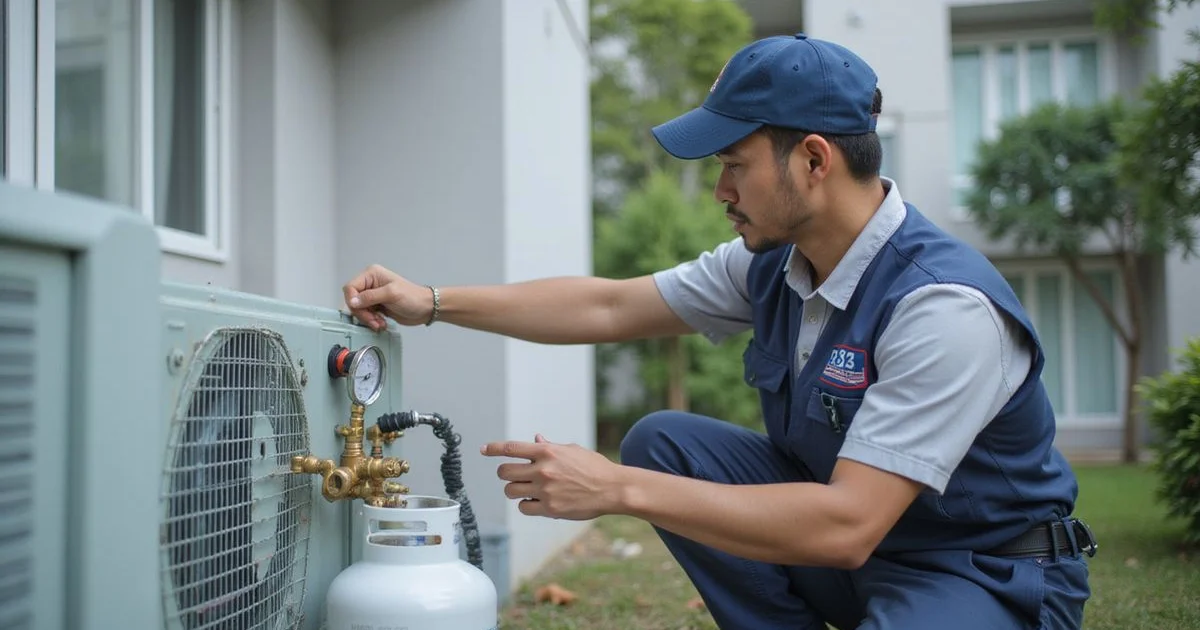
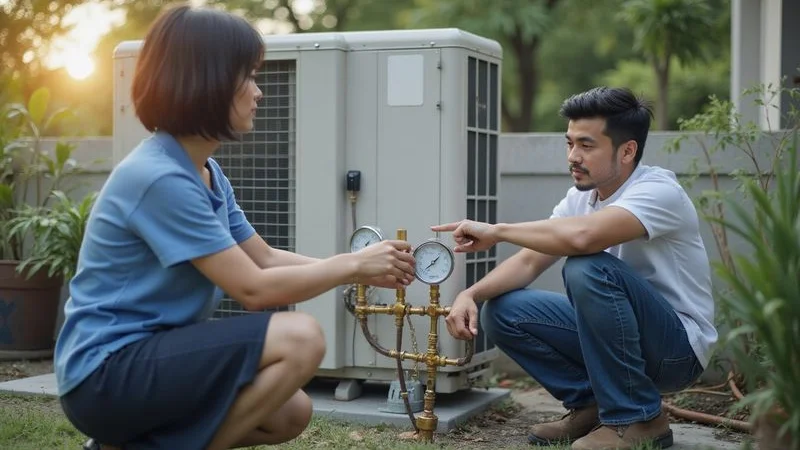
The technician performs a basic filter clean and then delivers the bad news. They might say, “Boss, your gas is very low, near zero. That is why it’s not cold.” To prove it, they may connect a manifold gauge for a few seconds. Some dishonest technicians even slightly unscrew the valve to let a burst of gas hiss out, creating a “sound effect” to convince you there is a leak or that the tank is empty.
Step 3: The Expensive Upsell
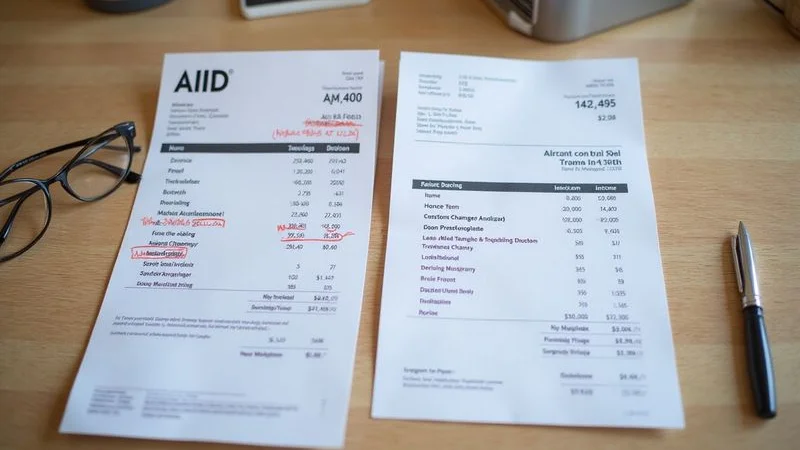
This is where the real money is made. The technician quotes you for a gas top-up, typically charging by PSI (pressure per square inch). You might be quoted RM100 to RM200 on top of the original service fee. Since they are already in your home and you are desperate for cool air, you agree. Suddenly, your RM60 bargain service has become a RM250 bill.
Step 4: The Recurring Nightmare
A few months later, the unit stops cooling again. You call them back, and they repeat the process. This happens because they never fixed the root cause, which was likely a dirty coil, a blocked drainage pipe, or a capacitor issue—not low gas.
Why This Scam Is So Effective
This trick works because of a fundamental misunderstanding about how air conditioners operate. Most homeowners do not know these three critical facts:
Refrigerant is a sealed system. Think of your aircond like a refrigerator, not a car. A car consumes petrol as it runs, but an air conditioner circulates refrigerant in a permanently closed loop. It does not “evaporate” or get used up over time. If your gas is low, you have a leak. Adding gas without fixing the leak is like pumping air into a punctured tyre; it is a temporary waste of money.
Low gas is rarely the cause of “not cold” issues. In our experience servicing homes across KL and Selangor, about 70% of cooling problems are due to dirt accumulation. A thick layer of dust on the blower or evaporator coil blocks airflow, making the air feel warm even if the gas levels are perfect. A proper chemical wash solves this by restoring airflow, no gas needed.
Pressure readings fluctuate with the weather. A technician can show you a gauge reading of 110 PSI and claim it is “dangerously low.” However, gas pressure changes based on the ambient temperature. On a cooler rainy day, the pressure naturally drops. Without knowing the correct range for the current temperature, you cannot judge if the reading is abnormal.
Common Variations of the Scam
Scammers are constantly evolving their tactics. Here are a few advanced variations we are seeing in the market right now.
The “R22 is Illegal” Panic
Technicians may tell you that your older unit uses R22 gas, which they claim is now “illegal” to top up, forcing you to buy a new unit or pay an exorbitant “hazard fee.” While Malaysia is phasing out R22, it is not illegal to service existing units. This is a fear tactic designed to trigger a panic purchase.
The “Explosive Gas” Myth
Some dishonest providers claim that R32 gas (common in newer units) is highly explosive and requires expensive, specialised handling. While R32 is mildly flammable, it is safe when handled by trained professionals. There is no justification for a massive surcharge just to top up R32.
The “Phantom Top-Up”
This is the most brazen version. The technician connects the hose but never actually opens the valve on the gas tank. They stand there for five minutes, “filling” the unit, and then charge you RM150 for absolutely nothing. Unless you are watching the gauge needle move and checking the tank weight, you would never know.
How to Protect Yourself
You do not need to be an HVAC expert to avoid being cheated. Use this checklist to keep your technician honest.
1. Know Your Numbers (The PSI Check)
Don’t just nod when they show you the gauge. Look at the numbers. In Malaysia’s tropical climate (average 32°C - 35°C), here is what a healthy operating pressure should look like for the suction line:
| Refrigerant Type | Normal Operating Pressure (Suction) |
|---|---|
| R32 | 130 - 150 PSI |
| R410A | 120 - 140 PSI |
| R22 (Older units) | 60 - 75 PSI |
If a technician claims your R32 unit is “empty” at 110 PSI on a cool morning, be skeptical.
2. Demand the “Soap Bubble Test”
If they say you are low on gas, that means you have a leak. Ask them to prove it. A legitimate technician will apply soapy water to the copper pipe joints. If there is a leak, bubbles will form immediately. If they refuse to do this test or cannot find a leak, do not authorise a top-up.
3. Look for Physical Evidence
Leaks often leave a physical trail. Look at the copper piping connections at your outdoor unit. If you see an oily residue or dark stains around the nuts, that is a genuine sign of a refrigerant leak. No oil usually means no leak.
4. Check for TTPM Cases
Malaysia has the Tribunal for Consumer Claims (TTPM), which handles disputes under RM25,000. Before hiring a new company, do a quick search or check their reviews to see if they have been flagged for unethical pricing. Reputable companies fear the Tribunal; scammers ignore it.
Why PJ Kool Includes Free Gas Top-Up
When we founded PJ Kool Aircond Service, we wanted to disrupt this toxic cycle of upselling. We made the decision to include a free gas top-up (up to 20 PSI) with every chemical wash.
This removes the conflict of interest. Our technicians have no incentive to lie to you about gas levels because they don’t make an extra commission on it. If your unit needs a small top-up to reach peak efficiency, we just do it.
You get price certainty. Most competitors charge RM120+ for a chemical wash and then add RM80 for gas. Our all-in pricing means the quote you see is the final price you pay. You save roughly RM100 compared to the “low quote, high upsell” model.
It guarantees the best result. We want your unit to be cold. By including the gas, we ensure that every unit we service is left running at optimal pressure. We don’t want to leave a job half-done because a customer (understandably) refused an extra charge.
Red Flags to Watch For
Here is a quick summary of warning signs that you are dealing with a potentially dishonest provider:
- The Price is Below RM80: A thorough chemical wash takes 60-90 minutes. A company charging RM50 cannot cover their costs without upselling.
- No Written Quote: They refuse to write down the price of the gas per PSI before starting work.
- Refusal to Leak Test: They want to add gas but refuse to look for the leak with soapy water.
- Cash Only, No Receipt: They insist on cash and cannot provide an official digital invoice or receipt.
The Bottom Line
The “gas top-up” scam persists because it is profitable and hard to detect. However, by knowing the correct pressure readings for your unit and insisting on a leak test, you can stop a scammer in their tracks.
At PJ Kool Aircond Service, we believe that honest work builds a lasting business. We check your gas levels as part of our standard aircond repair service, not as a way to squeeze more money out of you. Contact us today for a transparent, professional assessment of your aircond—no hidden fees, no surprise charges.
Mr. Heng
Founder & Lead HVAC Technician
Founder of PJ Kool Aircond Service with 20+ years of HVAC expertise in Petaling Jaya.