The Most Common Question When Buying an Aircond
We hear the same question from homeowners in Petaling Jaya almost every day. You want to know if the extra cost for an inverter unit is actually worth it. The price gap usually sits between RM500 and RM1,500 depending on the brand.
Our team has installed thousands of units across the Klang Valley over the last 20 years. We have tracked the performance of both types in real Malaysian homes.
Here is the honest breakdown of what you need to know.
How They Work: The Fundamental Difference
Non-Inverter (Fixed Speed)
A non-inverter aircond operates on a simple “all or nothing” principle. The compressor runs at 100% capacity the moment you switch it on.
It works until the room reaches your set temperature, perhaps 24°C. Then, the compressor cuts off completely. The room naturally warms up again. The compressor detects this rise and kicks back on at full blast.
This cycle repeats indefinitely.
Inverter (Variable Speed)
We often compare inverter technology to a car’s accelerator. A non-inverter is like driving in KL jam: stopping and starting abruptly. An inverter is like cruising on the highway at a steady speed.
The compressor in an inverter unit uses a variable-speed motor. It starts high to cool the room fast. But once the room hits 24°C, it doesn’t stop. It simply slows down.
The motor cruises at a low speed to maintain that temperature. This method uses significantly less energy than stopping and starting a heavy motor repeatedly.
Energy Savings: The Numbers
This is the biggest factor for Malaysian households. Our electricity tariffs are tiered, meaning high usage pushes you into expensive brackets.
Air conditioners are usually the biggest contributors to hitting the “red zone” of your TNB bill (Tariff Block 3, which charges 51.60 sen/kWh).
Typical monthly electricity cost (1.5HP, 8 hours daily use):
| Type | Monthly Cost (Est.) | Annual Cost |
|---|---|---|
| Non-inverter | RM140 - RM180 | RM1,680 - RM2,160 |
| Inverter | RM75 - RM105 | RM900 - RM1,260 |
| Your Savings | RM65 - RM75/month | RM780 - RM900/year |
We see that inverter units generally cut electricity usage by 40% to 60% compared to non-inverter models.
These savings compound quickly in Malaysia. Unlike countries with four seasons, we run our cooling systems year-round. A savings of RM70 a month becomes RM8,400 over a 10-year lifespan.
That clearly outweighs the initial RM1,000 price difference.
Upfront Cost Comparison
You will pay a premium upfront for the advanced technology. Here are the current 2026 market prices we are seeing for 1.5HP wall-mounted units in local appliance stores:
| Brand | Non-Inverter | Inverter | Price Difference |
|---|---|---|---|
| Daikin | RM1,150 - RM1,450 | RM1,850 - RM2,500 | RM700 - RM1,050 |
| Panasonic | RM1,100 - RM1,350 | RM1,700 - RM2,300 | RM600 - RM950 |
| Midea | RM850 - RM1,050 | RM1,250 - RM1,650 | RM400 - RM600 |
| Samsung | RM1,150 - RM1,450 | RM1,750 - RM2,350 | RM600 - RM900 |
Installation labour remains the same for both. We typically charge between RM300 and RM500 per unit, though this varies based on copper piping length and site difficulty.
Cooling Performance
Speed of Cooling
Non-inverter units used to have the advantage here. They blast cold air immediately.
Modern inverters have largely closed this gap. Features like Daikin’s “Powerful Mode” or Panasonic’s “iAuto-X” force the inverter to run at maximum capacity for the first 20 minutes.
Temperature Stability
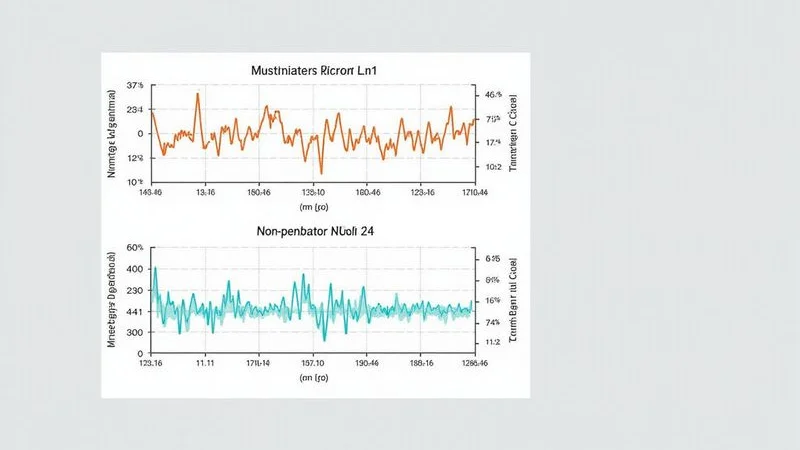
We find this to be the most underrated benefit of inverters. A non-inverter allows the room temperature to fluctuate by 2°C to 3°C.
You feel this physically. The room gets too cold, then stuffy, then cold again.
An inverter keeps the temperature variance within 0.5°C. The comfort level is constant. You won’t wake up reaching for a blanket at 3 AM because the room suddenly dropped to 20°C.
Noise Levels
We always recommend inverters for light sleepers. A non-inverter makes a distinct “clunk” and vibration sound every time the compressor restarts outside.
Inverter compressors run continuously at a low hum. Many modern indoor units operate at 19dB to 23dB. That is quieter than a whisper in a library.

Which Is Better for Different Situations?
Bedrooms: Inverter
We consider this non-negotiable for most clients. You spend 6 to 9 hours here every night. The precise temperature control prevents interrupted sleep, and the electrical savings are massive over 365 nights a year.
Living Rooms (Heavy Use): Inverter
Families with children or retirees often occupy the living room for 8+ hours a day.
An inverter is the smart financial choice here. The high usage means you will break even on the extra cost in roughly 18 months.
Living Rooms (Light Use): Non-Inverter
You might be a working professional who is rarely home. If the living room AC runs only for 2 hours on Saturday evenings, an inverter is unnecessary.
The return on investment would take over 7 years. A standard non-inverter is perfectly adequate.
Guest Rooms: Non-Inverter
We rarely recommend expensive units for rooms used once a month.
Save your budget here. Put that money toward a better model for the master bedroom instead.
Home Offices: Inverter
More Malaysians are working from home than ever before. If your home office AC runs from 9 AM to 6 PM, it qualifies as heavy usage.
Inverter technology prevents the “afternoon heat spike” that breaks your concentration.
Malaysian Climate Considerations
Our local weather makes inverter technology particularly effective for three specific reasons:
- Humidity Control: Inverters run continuously. This keeps the cooling coil cold, which constantly pulls moisture from the air. Non-inverters stop dehumidifying when the compressor cuts off, leaving the room feeling “sticky.”
- Constant Load: It is 32°C outside almost every day. Your unit works hard all year. Efficient technology matters more here than in mild climates.
- Tariff Protection: TNB rates penalise high consumption. Using inverters keeps your total household usage lower, potentially keeping you out of the highest tariff bracket.
Maintenance Differences
We perform the same basic tasks for both types of machines.
You still need to clear the dust filters. You still need professional standard cleaning every quarter to keep the blower clean. We also recommend a chemical wash once a year to remove deep grime.
The PCB Board Factor
There is one specific repair risk with inverters. They rely on a complex Printed Circuit Board (PCB) to manage the motor speed.
These boards are sensitive to the voltage fluctuations and lightning strikes common in KL.
If the board fries, a replacement costs between RM400 and RM900. It is rare, but it happens more often than compressor failure on non-inverters. We suggest installing a simple outdoor surge protector to mitigate this risk.
My Recommendation
We advise most PJ homeowners to choose the inverter model.
The math simply makes sense in our climate. If you use a room for more than 4 hours a day, the electricity savings will pay for the unit difference within two years.
The superior comfort and humidity control are essentially free bonuses after that break-even point.
Non-inverters still have a place. We recommend them strictly for guest rooms, prayer rooms, or rental properties where upfront cost is the only concern.
Final Advice
Remember that technology cannot fix poor installation. An undersized inverter will run at full speed constantly, defeating its purpose.
Our team at PJ Kool Aircond Service provides precise sizing calculations. We handle professional aircond installation to ensure your investment lasts for years.

Mr. Heng
Founder & Lead HVAC Technician
Founder of PJ Kool Aircond Service with 20+ years of HVAC expertise in Petaling Jaya.